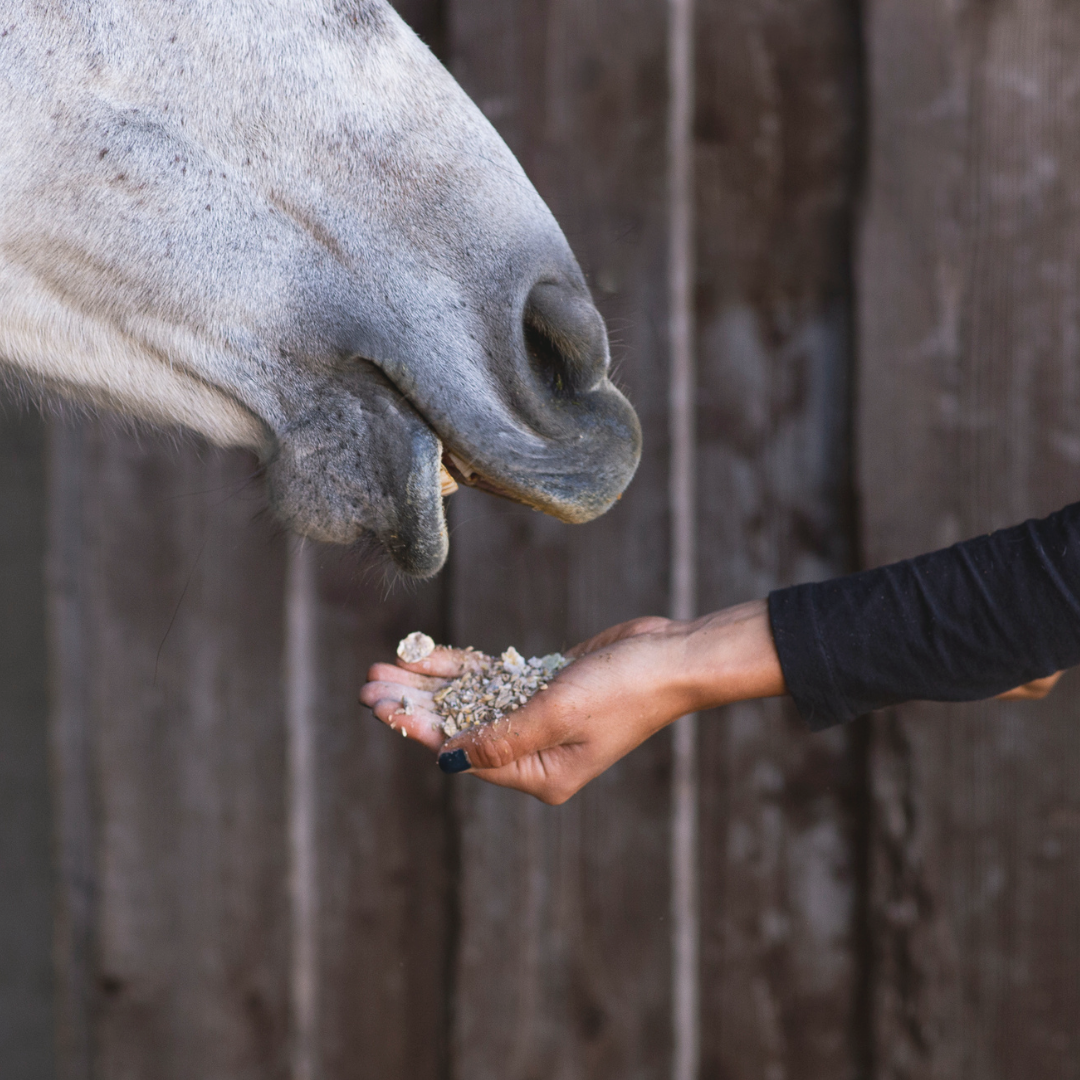

Storms Story: She Gets Fat on Air. Her Owner Still Had a Question.

“She gets fat on air.”
If you have an easy keeper, you know how much feeding advice can fit inside that sentence. Be careful with the grass. Be careful with the grain. Be careful with anything that looks like more.
Storm’s new owner had heard it, too.
She had bought the thirteen year old Gypsy Friesian mare for her children. Storm was wonderful on the ground and already carrying extra weight. Her previous owners said she had lived on hay alone for thirteen years. Having recently seen another horse go through laminitis, her new owner took the warning seriously.
But the horse in front of her was giving her more to think about than her weight.
Storm seemed constantly interested in finding something to eat. She worked through a mineral block. Her owner described a history of eating dirt at her previous home.
None of those observations, on its own, could tell her what Storm needed. Together, they were enough to make her ask.
“I just feel like there’s more I can be doing for her.”
She brought that question to ScoopRX Office Hours, our conversations with equine nutritionist Shana Winkel.
THE PART HER WEIGHT COUDN'T TELL US
It is a familiar bind. You are trying not to overfeed your horse, but you are not convinced her diet is covering everything. Adding something feels like ignoring the very advice you were trying to follow.
Shana separated two questions that had become tangled together: Was Storm getting enough calories? And was her whole diet supplying the nutrients she needed?
A horse can carry extra body fat without having a balanced ration. Weight gives us useful information about energy balance. It does not give us an inventory of every vitamin, mineral or amino acid in the diet.
That was the shift in Storm’s conversation. Her owner did not have to choose between taking her weight seriously and taking her concern seriously. Both belonged in the same feeding plan.
A DIFFERENT JOB FOR THE BUCKET
Shana recommended a ration balancer, discussing Tribute Essential on the call. She also addressed vitamin E, selenium and salt in the context of Storm’s existing diet and environment.
The purpose of the balancer was to supply concentrated nutrients in a smaller serving, rather than make a larger grain meal. A balancer still contributes calories. Its place in the program depends on the forage, the product and the amount fed.
That distinction mattered for a mare whose owner had been warned about anything extra going into the bucket. Something could be added for a specific nutritional job without turning the goal into weight gain.
The conversation also reached beyond the bucket. Shana discussed spreading slow feed hay nets around the pasture so Storm could spend more time eating forage and move between feeding spots. Winter feeding, turnout and the practical routine all belonged in the picture.
This was a plan for Storm. The useful part for another owner is the reasoning behind it, rather than copying her feed list.
A WEEK LATER, HER OWNER CAME BACK
At the next Office Hours session, Storm’s owner had an update.
She reported that Storm’s coat looked shinier, that she seemed calmer, and that feed time felt different: Storm seemed happier. Her trainer had come out for a lesson and noticed the coat before her owner mentioned it.
Those were the changes they saw during that first week. They do not tell us which part of the plan produced which change, or how another horse would respond. They gave Storm’s owner something specific to keep watching.
A week earlier, she had arrived with a worry she could not quite explain. Now she had a plan and observations to bring back to the conversation.
AN EASY KEEPER IS STILL AN INDIVIDUAL HORSE
“She gets fat on air” can be useful shorthand for a horse who holds weight easily. It becomes less useful when it answers every feeding question before we have asked it.
Storm’s owner paid attention to what did not fit. She did not dismiss her concerns because the mare was heavy, and she did not assume that looking hungry meant she needed a bigger dinner.
She asked for help looking at the whole program.
That is the part of this story worth carrying back to your own barn. Your horse’s weight matters. So do the forage, the amounts, the nutrient coverage, the routine and the changes you notice over time.
An easy keeper may need careful calorie management. She still needs a complete diet.
When you say your horse gets enough, what are you counting?